AI-Driven Discovery for Precision Medicine
BioDiscoveryAI combines advanced mathematics, AI-driven deep learning, and multi-omics to solve ill-posed biomedical problems and translate research into patents, publications, and real-world impact.
What is BioDiscoveryAI?
Research Focus
Founded by a researcher with independent training at Georgetown University and Harvard Medical School, BioDiscoveryAI bridges artificial intelligence and biology.
BioAI Capabilities
Our work focuses on solving ill-posed mathematical problems in biology using
AI and deep learning; transforming complex genomic and imaging data into
interpretable biomarkers, patents, and translational research outputs.
Research Pipeline
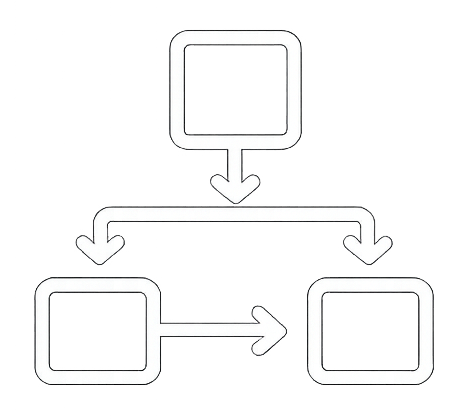
BioDiscoveryAI establishes a full research pipeline:
problem formulation → AI/ML modeling → biological validation →
patents → publications → clinical relevance.
Scietific Advisory Board
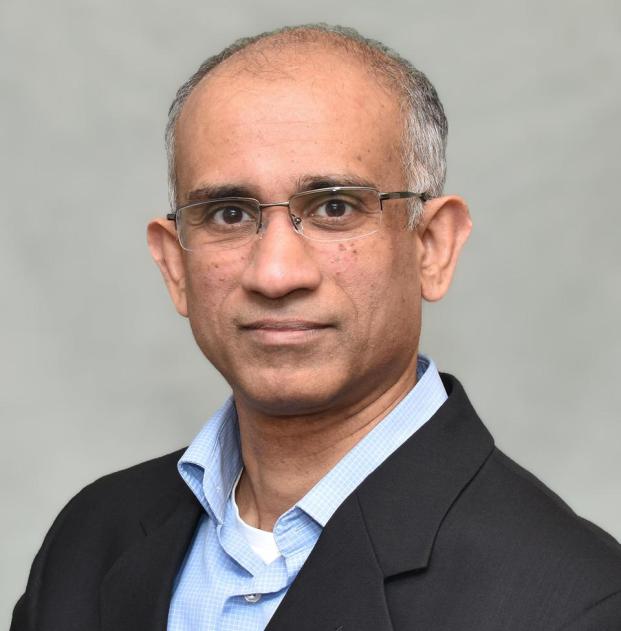
Anand T. N. Kumar, Director of the Mike Toth Head and Neck Cancer Research Center, Associate Professor, Harvard Medical School
Joining our team, Dr. Kumar contributes deep expertise in biomedical engineering and translational oncology, accelerating BioDiscoveryAI’s AI-driven approach to biomedical discovery.

Rabindra Roy,
Professor, Lomabardi Comprehensive Cancer Center,
Georgetown Univeristy
Prof. Rabindra Roy brings deep expertise in cancer biology and therapeutic resistance, reinforcing BioDiscoveryAI’s mission to translate AI-driven insights into impactful cancer research.

Rahul Pal,
Instructor of Otolaryngology–Head and Neck Surgery,
Harvard Medical School
Dr. Pal is an emerging leader in optical imaging and molecular biomarker discovery, contributing advanced imaging perspectives to BioDiscoveryAI’s translational cancer research efforts.
Mission & Scientific Pipeline
BioDiscoveryAI was founded to translate advanced mathematics and artificial intelligence into real-world biomedical discovery. Our mission is to develop rigorous, AI-driven biomarker discovery pipelines that support early detection, prognosis, drug discovery, and early intervention by bridging mathematics with multi-omics and clinical data to generate reproducible science, patents, and publications.
Development of mathematically rigorous models for challenging biological problems, signal decomposition, and feature extraction; forming the foundation for trustworthy AI in biomedical research.
Application of AI pipelines to cancer multi-omics datasets to enable discovery of prognostic, predictive, and early-detection biomarkers, as well as potential therapeutic targets, with demonstrated clinical relevance.
Translation of validated discoveries into peer-reviewed publications and patents, establishing a reproducible pathway from research to intellectual property.
We work with early-stage startups, biopharma, and academic leaders to unlock the transformative power of AI in biomedical innovation, from discovery to translation, with real-world impact.
Where Biology Meets AI - Our Pipeline
Ovarian Cancer
Early Detection • Prognosis • Clinical Stratification
AI-driven analysis of molecular and clinical datasets to identify early-stage disease and stratify patients by outcome risk.
🟡 Pipeline | IP Generation
Pancreatic Cancer
Early Detection • Prognosis • Clinical Stratification
Integrated multi-omic and clinical data approaches for early detection and outcome prediction in high-risk populations.
🟡 Pipeline | IP Generation
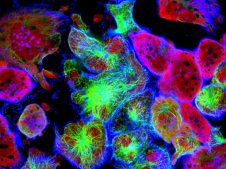
Prostate Cancer
Early Detection • Prognosis • Clinical Stratification
Predictive modeling to distinguish indolent from aggressive disease and support risk-adapted clinical decisions.
🟡 Pipeline | IP Generation
Our Productivty
1. U.S. Provisional Patent Application No. 63/909,244, filed on October 31, 2025, entitled 685 “MULTI-GENE SIGNATURE PREDICTING SURVIVAL IN STAGE I LIVER CANCER,” has been submitted by Rabindra Roy and Ritam Adhikari through Georgetown University.
2. Multi-Gene Signature Associated with 1-Year Survival in Stage I Liver Cancer
Adhikari, R., Kallakury, B. V. S., Dash, C., & Roy, R. (2026). A Multi-Gene Signature Associated with 1-Year Survival in Patients with Stage I Liver Cancer: Integration of Preclinical and TCGA Data. Current Issues in Molecular Biology, 48(2), 136. https://doi.org/10.3390/cimb48020136.
🔗 View Full Paper
https://www.mdpi.com/1467-3045/48/2/136
3. AACR Abstract (Liver Cancer)
Adhikari R, Dash C, Roy R. Unveiling dichotomies between liver cancer and adjacent normal tissues in Wilson’s disease model. Cancer Res (2025) 85 (8_Supplement_1): 2348. https://doi.org/10.1158/1538-7445.AM2025-2348
Molecular and computational analysis revealing prognostic divergence in early liver cancer phenotypes.
🔗 View Abstract
https://aacrjournals.org/cancerres/article/85/8_Supplement_1/2348/757926/Abstract-2348-Unveiling-dichotomies-between-liver.
4. SPIE Photonics West Abstract (Imaging / AI / Optics)
AI models capable of recovering parameters with improved stability and accuracy under conditions of signal overlap and noise, where the underlying problem is mathematically ill-posed.Adhikari R, Frazee KT, Krishnamoorthy M, Pal R, Kumar AT. Fluorescence lifetime decay parameter estimation for multiplexed molecular imaging.
🔗 View Abstract
https://spie.org/photonics-west/presentation/Fluorescence-lifetime-decay-parameter-estimation-for-multiplexed-molecular-imaging/13832-66.
5. AACR Annual Meeting Abstract (2026)
Adhikari, R, Dash C, Roy R. Systemic Molecular Disparities in Black vs. White Breast Cancer Survivors: Beyond Socioeconomic Determinants. (Accepted for AACR 2026, April 2026, San Diego).
Integrated molecular and clinical analysis highlighting outcome disparities unexplained by socioeconomic factors.
Accepted- Abstract to be released.
Our team
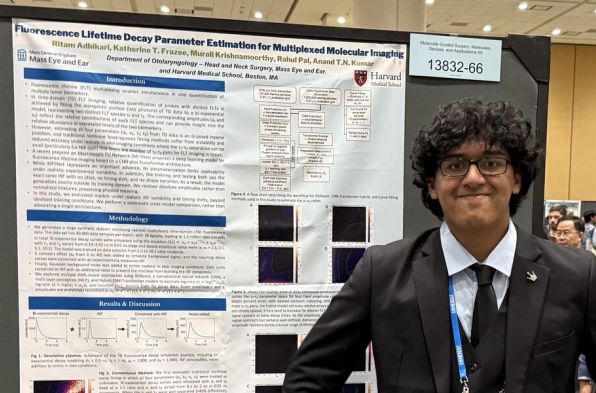
Ritam Adhikari, CEO & Co-founder
Ritam Adhikari is the CEO and Co-founder of BioDiscoveryAI. Trained through academic research experiences at Harvard Medical School and Georgetown University, he applies mathematically grounded AI and machine learning methods to biomarker discovery spanning early detection, prognosis, and drug discovery.
He is a named inventor on a provisional patent filed through Georgetown University and a published author who has presented research at multiple scientific conferences. BioDiscoveryAI represents the foundation of a broader effort to develop scalable, AI-driven biomarker discovery pipelines for biomedical innovation.
About us
We generate intellectual property across cancer early detection, prognosis, and clinical outcome prediction, dryg target identification by mining complex biological and clinical data.
Useful information
We are accepting internship applications from highly motivated high school students with at least one year of Python programming experience.
Contacts
support@biodiscoveryai.com
+1 9255483295
2395 Capistrello St
Dublin, CA
USA
